
Fashion Designers: From Concept to Finished Garment
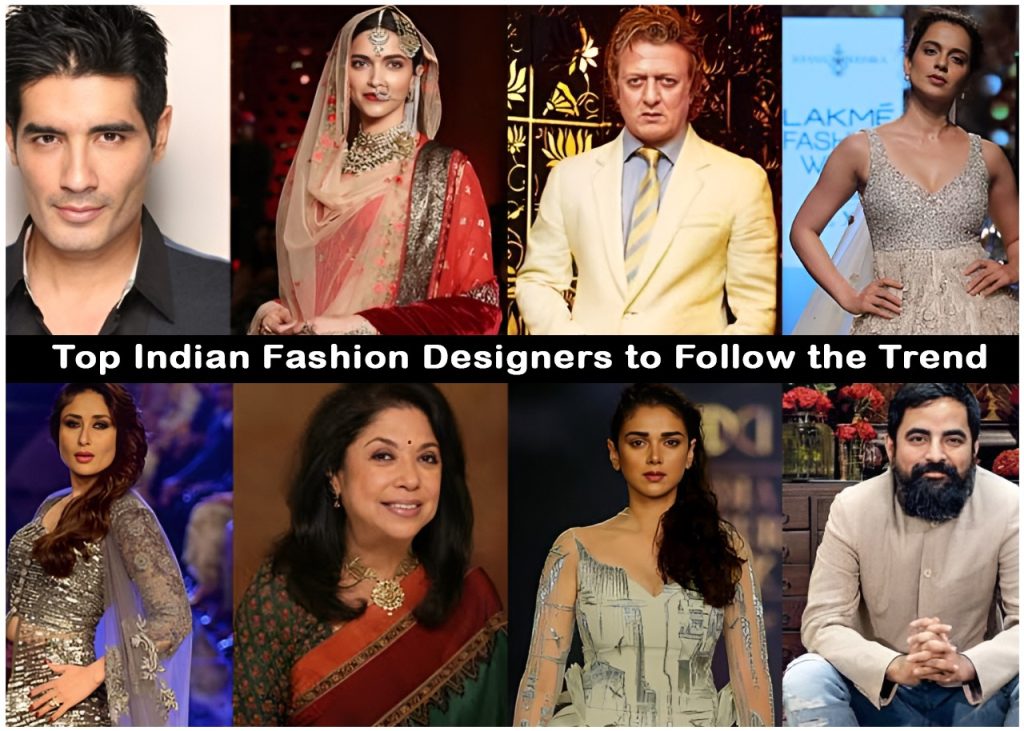
Fashion designers are professionals who know how to choose the right material, colour, pattern, and style. First of all, they must understand current trends as well as customer preferences. Therefore, selecting the right design and fabric becomes an important part of their work.
In some cases, clothes are specially made, such as in haute couture or bespoke tailoring. However, most clothes available in the market are produced for mass consumption. For example, many garments are designed for special occasions, while others are created for everyday wear. In addition, these everyday garments are often part of what is known as fast fashion.
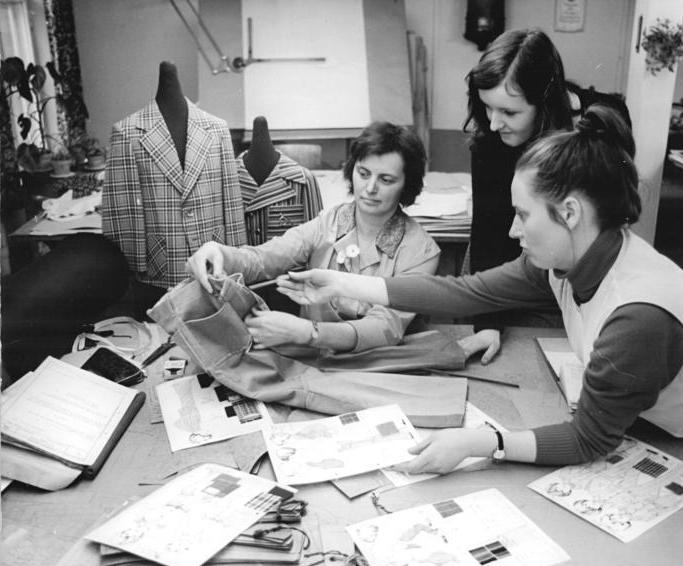
Fashion designers usually begin their work by sketching the first design of a garment. After that, they select suitable fabrics and patterns. Next, they plan how the garment will be constructed. Finally, they give instructions to the people who will produce the clothing. As a result, the design is turned into a finished product.
Fashion designers are also responsible for designing accessories and footwear. For instance, they may create rings, bracelets, necklaces, and other items that complement clothing. Moreover, these accessories help complete a person’s overall appearance.
Since clothing production takes time, designers must anticipate the needs and wishes of customers in advance. Therefore, they carefully plan their designs according to upcoming trends. In addition, fashion designers use their creativity and knowledge of fabric design to improve the look and quality of garments. This includes decisions about shape, colour, patterns, and cutting techniques. Ultimately, all these elements work together to create stylish and appealing clothing.
Structure:-
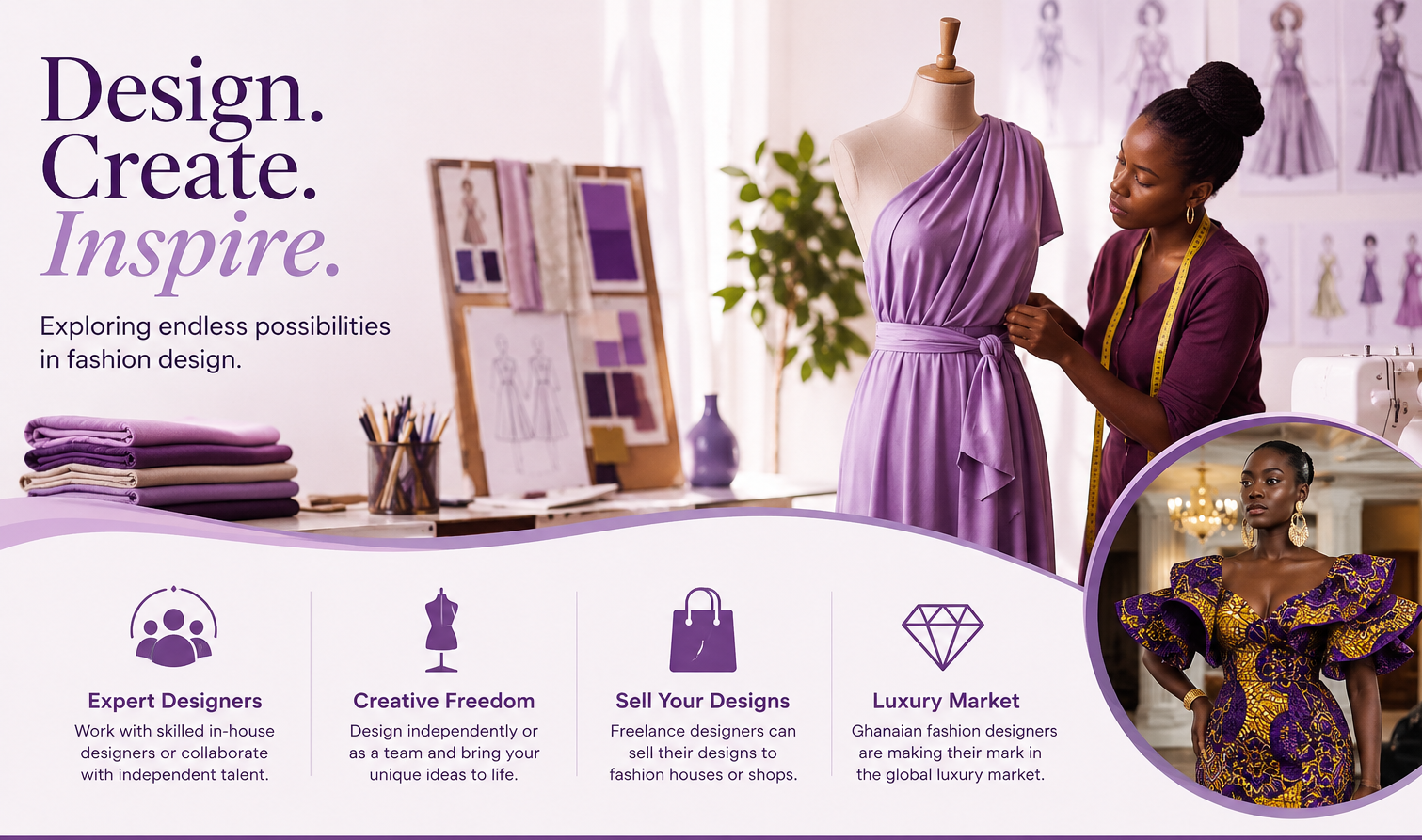
Many areas in the fashion industry can be explored by designers. A complete team is usually provided by fashion designers for a fashion house. The company’s designs are owned by in-house designers. Alternatively, work can be done independently or in teams. In the case of freelance designers, work is done independently, and designs are sold to fashion houses or shops. In recent years, the luxury market has been targeted by Ghanaian fashion designers, and many designs are now being created for this market.
Technology With Fashion:-
Clothes that fit well and look good can be bought online through virtual dressing. A virtual dressing room is used as a virtual fitting room where clothes can be tried on digitally. The virtual changing room is also known as a virtual fitting space. In addition, good deals can be found through these online systems. Furthermore, a virtual changing room is considered comparable to the changing rooms available in physical stores.
History of fashion design:-
Bharat is a country that has a long history of design and the fashion industry. It is a country that has been developing since the 1980s and 1990s. In the following years, fashion as an industry in India was taken much further.
Year: 1980: The first generation of fashion designers in India began to emerge. This included Satya Sarve. Rohit Khosla (1958–1994) became a supreme figure in the fashion industry.
Designers first sketch the design of a car. Then they paint and refine the design. After that, they discuss the time and cost of the project with the client. Next, the client approves the design, and the fashion house receives payment from the client. The designer then prepares the complete design model. Finally, manufacturers use the sketch and model to produce the car.
Before the mid-19th century, people did not clearly distinguish between haute couture and ready-to-wear clothing. Dressmakers and seamstresses created most basic women’s clothing directly for customers according to their agreements. In addition, tailors made some women’s garments using cotton cloth.
Mass market:-
The fashion industry is currently experiencing high sales. This market serves a wide range of consumers. Famous fashion brands produce clothing at different price levels and styles. As each season approaches, designers guide customers on what to wear and how to style it. To save money and time, manufacturers use simple techniques and inexpensive fabrics. They can easily produce these garments with machines, so companies can sell the final products at lower prices.
Large-scale production also requires a large market. Even after sewing machines appeared, designers and workers still treated clothing production as a creative process. However, the work required a lot of labour. By 1900, manufacturers around the world produced more than 20 million sewing machines each year. After the invention of the sewing machine, people across the world quickly adopted this technology with great enthusiasm.
During the Industrial Revolution (Oudhyogi Kranti), people widely spread the customs and traditions of the ordinary class. This period also transformed common people into a labour force. Many Italian immigrants brought European skills and traditions to their homeland. Through their efforts, they developed their abilities and achieved mastery in their work.
Entry-Level to Expert Fashion Designer Salary in India
In present-day India, a fashion designer earns about ₹3.3 lakh per year. Many beginners earn around ₹7,000 per month as a starting salary. However, salaries vary depending on experience, skills, and location.
New York has the largest number of fashion designers by region, with about 7,930 designers working there. The city also serves as a major hub of fashion design because many luxury designers and famous brands operate there.
Fashion influences everyday life, and the fashion industry continues to grow and shine. Fashion is not only a modern trend; it also connects with history. Many fashion enthusiasts understand that today’s styles often come from past inspirations.
Growth and Trends in the Fashion Industry
The fashion industry recognizes New York, Paris, London, and Tokyo as major fashion cities. The industry also focuses on eco-friendly practices. Many companies treat their workers fairly and avoid discrimination. Popular brands such as Zara attract many customers around the world, and people from different backgrounds buy their products.
The fashion industry plays an important role in India. It has become very popular not only in India but also in many other countries. Over the years, Indian fashion has gained international recognition. The industry also highlights four main fashion capitals: New York, London, Paris, and Milan. At the same time, customer preferences continue to change. More people now choose protective and comfortable clothing to reduce the negative effects of industrial production.